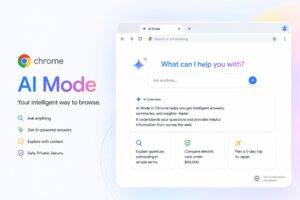


Google Search is moving from short keyword queries toward longer, AI-assisted conversations. At Google I/O 2026, Google described its intelligent AI-powered Search box as the biggest upgrade to the Search entry point in more than 25 years. People can now ask fuller questions, use richer inputs, and expect a useful answer before they visit a website.
For businesses and publishers, this does not mean SEO is finished. It means SEO has to become clearer and easier for both readers and search systems to interpret. AI search optimization is the sensible work of making content visible in this new search experience while keeping the basics that made websites discoverable.
TL;DR: What Google’s AI-Powered Search Box Means for SEO
- Google’s AI-powered Search box is shifting search from short keywords to longer, conversational questions.
- For SEO, the main goal stays the same: publish helpful, crawlable, original content.
- Google says AI Overviews and AI Mode still rely on its core Search ranking and quality systems, so GEO works best when it builds on solid SEO, not when it tries to replace it.
What is Google’s AI-Powered Search Box?
Google’s AI-powered Search box is built to understand more than a few typed words. It can support longer prompts, multimodal inputs such as images and files, and AI experiences such as AI Overviews and AI Mode. Google says its generative AI features in Search are still rooted in its core ranking and quality systems, so crawlable, helpful pages remain central to visibility.
| Traditional Search | AI-Powered Search |
| Short keyword query | Natural-language prompt |
| List of links | Summary and follow-ups |
| One search at a time | Multi-step research path |
The search box is no longer just an entry field. It is becoming a research assistant that can interpret intent, refine questions, and guide users through a topic.
How AI Search Changes User Behavior
AI search encourages people to ask complete questions. A user may not type “content marketing.”
They may ask,
“How should a small business plan content for Google AI search without losing organic traffic?”
That question includes context, concern, and a desired result.
This changes the job of a web page. A page should not only match a phrase. It should answer the surrounding intent.
Strong pages now need to:
- Define the topic in plain language
- Answer likely follow-up questions
- Compare choices when readers need a decision
- Provide examples, limits, and next steps
- Build trust through accuracy and useful detail
This is where AI search visibility becomes different from normal ranking. A brand may gain value when its content is cited, summarized, or used to support an AI-generated answer, even when the click path is less direct.
What Google’s AI Search Means for SEO
According to Google Search Central, SEO still applies to generative AI features. Pages need to be indexable, eligible for snippets, and useful for readers. Technical SEO, internal links, descriptive titles, structured pages, and fast loading still matter.
So, the difference is depth. A thin post that repeats a keyword will struggle against a page that explains the issue, adds examples, and answers the questions people ask next.
For general readers, the main lesson is that search engines are getting better at reading intent. Content must be written for humans first, with enough structure for machines to parse it correctly.
Generative engine optimization should be treated as an extension of SEO. It is not a separate trick. It is the practice of making content useful enough, specific enough, and organized enough to appear in AI-assisted search experiences.
Note these GEO Guidelines for Better AI Visibility
A strong GEO plan begins with substance. Google advises site owners to create unique, non-commodity content that satisfies real needs. In plain English, that means avoiding copycat articles and giving readers something they would not get from ten similar pages.
Use these guidelines when planning content:
- Lead with a direct answer near the top of each key section.
- Write around intent, not only keywords.
- Add original insight, such as examples, expert notes, data, or practical observations.
- Use clean formatting with headings, bullets, tables, FAQs, and short paragraphs.
- Keep technical SEO healthy so the page can be crawled, indexed, and shown with a snippet.
- Avoid forced mentions, keyword stuffing, and mass-produced pages.
- Update key pages as AI Search features change.
Content Strategy for Google AI Search
A smart content plan builds topic authority over time. One article on AI search can introduce the subject, but related pages should answer narrower questions.
Useful supporting topics include:
- How AI overviews affect organic traffic
- How to optimize service pages for conversational search
- How small businesses can prepare for AI Mode
- SEO checklist for AI-powered search results
Internal links should guide readers naturally. A blog about the AI-powered Search can link to pages on technical SEO, content strategy, local SEO, and analytics. Measurement also needs a wider lens. Rankings and clicks still matter, but brands should also watch impressions, branded searches, assisted leads, and engagement.
Frequently Asked Questions:
What is Google’s AI-powered Search box?
It is a Search experience that uses AI to understand longer questions, accept richer inputs, and return answers, links, and follow-up paths. For users, it feels less like typing keywords and more like asking a research assistant for help with a task.
How does AI search affect SEO for small businesses?
Small businesses need clearer service pages, better local signals, helpful blogs, and content that answers detailed customer questions. The best pages explain services, pricing factors, locations served, trust signals, and next steps without making readers work too hard.
Is GEO replacing SEO?
No. Google treats optimization for generative AI Search as part of SEO because AI features rely on core Search systems. GEO mainly adds stronger answer structure, topic coverage, and clarity for AI-assisted results.
How can I optimize content for AI search results?
Start with direct answers, use clear headings, add original examples, keep pages crawlable, and answer related long-tail questions. Strong internal links and updated information also help search systems understand the page.
Will AI Overviews reduce website traffic?
They may change click behavior. Some users will get quick answers without visiting a site. Strong content can still attract qualified visitors when it offers depth, tools, examples, or expert guidance beyond a short summary.
Takeaway
Google’s AI-powered Search box signals a new phase for search behavior, but the foundation remains familiar. Helpful content, technical strength, and trust still matter. The best strategy is not to chase every AI trend. It is to build pages that answer real questions better than the average result.
Need help preparing your website for AI-powered search? Contact WSIMLogix to build a smarter SEO strategy that improves visibility across Google Search, AI Overviews, and future search experiences.