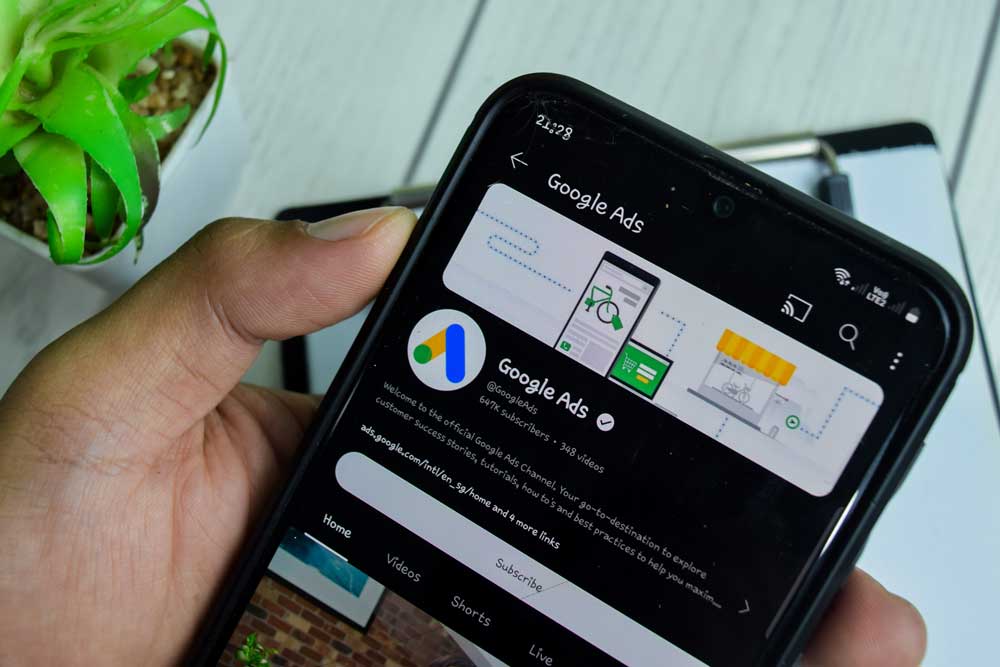

Google Ads is shifting fast, driven by AI, privacy rules and rising media costs. Treat 2026 as a reset year rather than just another round of tweaks and you can lift reach while keeping ROI under control.
1. Let Google’s AI work for you, not instead of you
Google has doubled down on AI-driven campaigns such as Performance Max, AI-powered Search and Demand Gen, with new “Power Pack” style solutions that pull together Search, YouTube, Discover, Maps and Display into unified systems. These formats let bids and placements respond to real-time signals at a scale humans cannot match.
That trend will only accelerate into 2026 as Google adds lifecycle goals, richer reporting and tighter controls over AI campaigns. The smart response is not to resist automation, but to train it.
Core actions:
- Simplify account structures so each campaign has a clear objective and audience.
- Use value-based bidding, such as Target ROAS or Maximize Conversion Value, so Google chases profit, not just conversions.
- Keep conversion tracking clean and complete, including key offline outcomes where possible.
Think of automation as very fast but slightly blind. Your job is to provide high-quality signals and guardrails.
2. Put first-party data at the center
By 2026, third-party cookies will be close to obsolete, and global guidance on privacy-led marketing is clear that first-party data has become the primary fuel for both targeting and measurement.
In practice for Google Ads, that means:
- Connecting your CRM to build Customer Match and similar audiences from actual buyers.
- Using consented web and app behavior in GA4 to create remarketing and predictive segments.
- Sending offline conversions and store sales back into Google Ads so bidding reflects real revenue, not just form fills.
The more accurately your data mirrors customer value, the better AI bidding systems perform in a world of patchy tracking.
3. Update your search strategy for 2026
Search remains the backbone of many accounts, but the old model of tight phrase match lists and manual bids is fading. Google’s own analysis shows that advertisers who move from phrase to broad match within Smart Bidding often see more conversions and higher conversion value while holding their CPA or ROAS targets.
A 2026 search playbook should:
- Use broad match with Smart Bidding for discovery and scale, backed by sharp negative keyword lists.
- Reserve exact match for branded and high-value terms where you want tight control and clearer reporting.
- Align ad copy to user intent, using search term insights and AI-generated suggestions inside Google Ads.
Search behavior these days is heavily mobile, so ad assets and landing pages need to load quickly and read clearly on small screens.
4. Treat creative as a performance lever, not decoration
AI-driven formats now generate headlines, descriptions and visual assets directly from product feeds and site content. Performance Max already uses generative tools to create and test assets, and those features are expanding across YouTube, Shopping and other surfaces announced at Google Marketing Live.
To stay in charge of brand quality and performance:
- Supply strong starting assets, including high-resolution images and multiple headline angles that speak to different audience mindsets.
- Use YouTube and vertical video placements inside Performance Max and Demand Gen to reach users who rarely engage with text-heavy ads.
- Test creative themes through structured experiments and keep a shortlist of proven winners to recycle into new campaigns.
Creative should sit alongside bids and budgets in your weekly optimization checks, not be refreshed only when someone finds time.
5. A 90-day action plan for brands and agencies
Many businesses work with a PPC agency or in-house specialist team. Either way, a straightforward 90-day roadmap helps turn the 2026 playbook into action.
Weeks 1 to 4
- Audit account structure, conversion tracking, and data connections.
- Remove overlapping campaigns and legacy experiments.
- Connect CRM, offline conversions and consented first-party audiences.
Weeks 5 to 8
- Move suitable campaigns to Smart Bidding with clear, realistic targets.
- Introduce Performance Max where you have solid creative and product feeds.
- Run at least one experiment on match types and one on creative themes.
Weeks 9 to 12
- Shift budgets toward campaigns with proven ROAS or profit contribution.
- Roll out winning experiment learnings into always-on activity.
- Document a recurring checklist covering bids, budgets, creative, audiences and measurement.
For many organizations, partnering with specialists or using managed PPC services is an efficient way to keep up with platform changes while internal teams focus on brand and customer experience.
Also Read: Win Nearby Customers, Local Search Tactics for San Francisco Firms
Final thoughts
Google Ads in 2026 will reward advertisers who accept that AI and privacy are now the default setting. The brands that keep reach high and ROI strong will be those that feed the system with rich, honest data, set clear business goals, protect their creative standards and review performance often. Treated that way, Google Ads stops feeling like a black box and becomes a disciplined, measurable growth channel for the year ahead.